If you’ve ever wondered whether you should be saving more or investing already, you’re not alone.
This is one of the most common money questions and also one of the most confusing.
So let’s slow this down and make it simple.
You don’t have to choose one forever.
But there is a smarter order.

First: What’s the Difference Between Saving and Investing?
Saving (a.k.a. your financial safety blanket)
Saving is about sleeping at night.
It’s the money you keep around for:
-
Emergencies that refuse to schedule themselves
-
Short-term needs you know are coming
-
Peace of mind (which is wildly underrated)
This money usually lives in a high-yield savings account, where it stays put and behaves itself.
No drama. No mood swings. Just there when you need it.
Investing (a.k.a. playing the long game)
Investing is about future you.
It’s the money you set aside for:
-
Retirement
-
Long-term goals
-
Building wealth over time
This money goes into things like stocks, ETFs, or retirement accounts — and yes, it will go up and down. That’s normal. That’s the deal.
Investing isn’t meant for next month’s bills.
It’s meant for the version of you who’s very glad you started early.
So… Which Comes First?
For most people, the answer is:
Saving comes first. Then investing.
Not because investing is bad, but because investing works best when your basic financial needs are already covered.

Here’s the part most advice skips
If you invest before you have savings, a few things tend to happen:
-
You panic when the market dips
-
You pull money out too early
-
You rely on credit cards when life happens
None of that means you’re bad with money. It just means the foundation wasn’t there yet.
Saving gives you stability. Stability makes investing easier to stick with.
The Minimum You Should Save Before Investing
This doesn’t need to be complicated.
A good starting point:
-
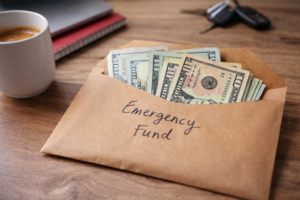
$1,000 emergency fund
That’s enough to handle many unexpected expenses without touching your investments.
Once you have that:
-
You can keep building savings
-
Or start investing small amounts at the same time
You don’t need to wait until everything is “perfect.”
When Investing Makes Sense
You’re usually ready to invest when:
-
You have a basic emergency fund
-
Your bills are covered
-
You won’t need the money anytime soon
At that point, investing even $50–$100 a month is completely reasonable.
You don’t need a big lump sum. You just need consistency.
Can You Save and Invest at the Same Time?
Yes and many people do.
A simple approach looks like this:
-
Savings for emergencies and short-term needs
-
Investing for long-term goals
The key is knowing what each dollar is for.
Money without a job causes stress. Money with a purpose feels calmer.

A Simple Order to Follow
If you want something straightforward, use this:
-
Build a $1,000 emergency fund
-
Cover monthly expenses comfortably
-
Start investing small, consistently
-
Increase both savings and investing over time
That’s it.
Doing them in the right order makes both easier — and helps you stick with your plan long term.